

That painting of a purple dog with seven legs might not match the lounge room cushions, but it deserves more than a brief appearance on the fridge before disappearing into a school bag. A thoughtful guide to displaying children's artwork starts with one simple idea: let your child see that their effort matters, without letting paper take over every bench, cupboard door and spare patch of wall.
Children make a remarkable amount of art, especially through kinder, preschool and the early primary years. Some pieces are full of personality. Others are precious because of the tiny handprints, wobbly name writing or memory attached to the day they came home. The aim is not to keep every sheet forever. It is to make room for the pieces that make your family smile, then create an easy rhythm for the rest.
Start with a display spot your child can see
The best artwork display is usually not the most styled one. It is the one your child notices every day. A fridge, hallway, playroom wall or the side of a filing cabinet works well because these are lived-in spaces, not hidden corners reserved for special occasions.
Try giving each child a defined zone. This could be one shelf, a section of the fridge or a small length of wall. A shared gallery can look lovely, but individual spots help siblings feel equally celebrated and make it easier to rotate work fairly.
Keep the display low enough for young children to look at closely. They will often point out details, tell the story behind a drawing, or proudly show visiting grandparents exactly where their latest creation is hanging. That little moment of recognition is the whole point.
Make the fridge a changing family gallery
The fridge is popular for good reason. It is practical, central and easy to update after school. It also turns everyday routines like packing lunches or making dinner into reminders of what your family has been creating.
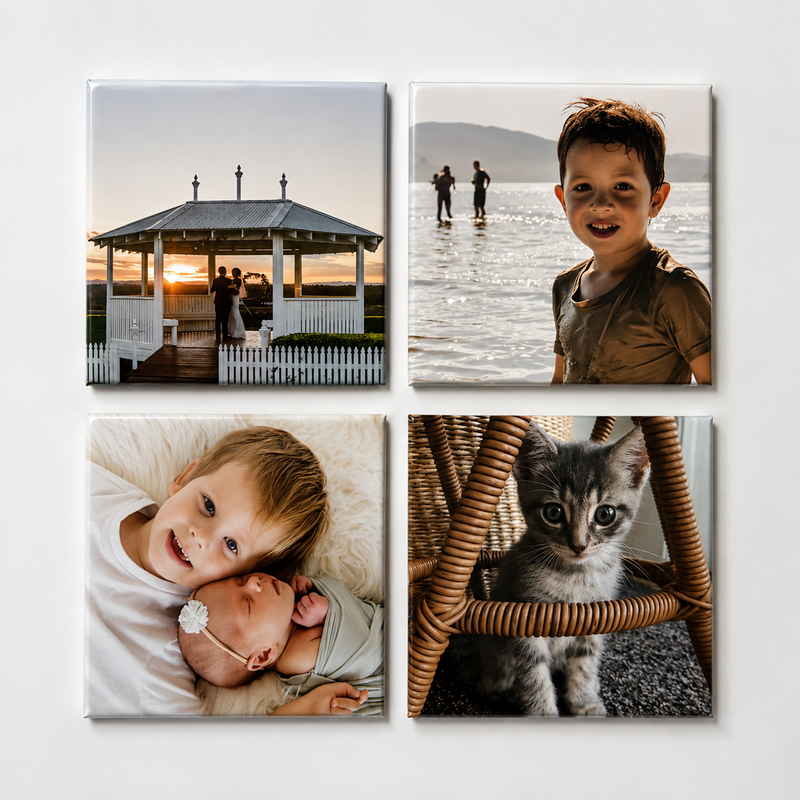
Magnets are particularly handy here because they do not damage the artwork and make swaps quick. You can use a mix of simple clips, colourful shapes and personalised photo magnets featuring family faces, pets or favourite holiday moments. They add warmth around the artwork without competing with it, and children love spotting themselves in the display.
Give yourself permission to curate. A crowded fridge can make every piece blend together, while a smaller selection lets each drawing have its moment. Keep three to six current pieces on show, depending on the size of your fridge, then replace one whenever a new favourite arrives home.
A good rule is to keep artwork away from the very edges of doors or handles, where it is more likely to be knocked, splashed or caught. If you are displaying a particularly treasured painting, let it dry completely first and avoid placing it beside the kettle or other sources of steam.
Let kids help choose what goes up
Asking, “Which one would you like to put on the fridge?” is a small way to build confidence. It also avoids the pressure of assuming adults must decide what is worthy of display.
You may be surprised by their choices. The piece you see as a quick scribble might represent a whole imaginary world to them. When children get a say, the display becomes a record of their perspective rather than just the neatest or most colourful work.
Create a wall gallery that can grow with them
A gallery wall gives children’s art a more permanent feel, especially for pieces you want to enjoy for a season or longer. The trick is choosing a system that is easy to change. If swapping artwork involves measuring, hammering and re-framing every time, it will quickly stop happening.
Picture ledges, clipboards, wire with wooden pegs, or lightweight frames with front-opening panels all make updating simple. For rental homes, removable adhesive hooks and strips can be a practical option, but always check the product instructions and test a small area first. Paint finishes vary, and the last thing anyone needs is an unexpected patch of paint coming away at inspection time.
Choose a wall where the artwork will not be constantly bumped. A hallway can work beautifully, though narrow spaces may suit flatter frames. The playroom is ideal for a lively, constantly changing collection. In a bedroom, keep displays calm and uncluttered so the room still feels restful.
There is no need to force a strict colour palette. Children’s art is meant to be joyful and often gloriously chaotic. If you prefer a more pulled-together look, use matching frames or a repeating border colour. The art can stay wonderfully wild while the display provides a little visual order.
Use rotation to prevent paper overload
The biggest challenge is rarely finding a place for one drawing. It is deciding what to do with the next fifty. A rotation system protects your home from piles while ensuring children still feel celebrated.
Set aside a folder, box or large envelope for each child. When new artwork arrives, display the standout piece and place a few other favourites in their folder. At the end of each term, look through the collection together. Keep the pieces that show a milestone, capture their personality or bring back a clear memory. Photograph the rest before recycling them if you would like a record.
This approach can feel difficult at first, particularly if every painting comes with a proud explanation. But keeping fewer pieces makes the ones you do save more meaningful. It also means you can actually find them years from now, rather than opening a cupboard to an avalanche of crumpled paper.
For bulky crafts, take a photo from a few angles before letting them go. If your child is especially attached to a creation, display it on a shelf for a week or two, then explain that it is time to make room for the next project.
Turn special artwork into lasting keepsakes
Some art deserves a life beyond the fridge or gallery wall. A first self-portrait, a Mother’s Day card, a drawing of the family or a painting from a memorable holiday can become part of your family story.
You might scan or photograph favourite pieces and create a yearly photo book, a simple calendar, or a set of prints for grandparents. This is especially useful for relatives who live interstate or who would genuinely love a small, personal gift. Include the child’s name, age and a short note about the artwork while you still remember the story behind it.
For a more everyday option, photographing art beside the young artist is lovely. Years later, it shows both the picture and the stage of life that made it. Good natural light near a window is usually enough. Photograph the work straight on, crop out the table or floor around it, and save the file in an album named by year.
A guide to displaying children's artwork without the clutter
A display works best when it has a few gentle boundaries. Keep the current gallery small, rotate it regularly and save only what feels truly representative. This is not about being ruthless or turning family memories into a filing project. It is about making space for the art you love to be noticed.
If you have more than one child, avoid comparing their output or giving the most wall space to the child who creates the most. A tiny toddler painting can matter just as much as a detailed school project. Equal care does not have to mean identical displays, but it does mean every child can see that their contribution belongs in the home.
It also helps to think about safety and durability. Keep heavy frames well secured, avoid glass in areas where small children play, and choose displays that will survive a slammed door, a curious toddler or a wet school bag dropped nearby. The practical choice is often the one that lets you relax and enjoy the art.
The best family displays will not look like a catalogue spread. They may include crooked paper edges, bright paint, old birthday invitations and a magnet holding up a shopping list. That is what makes them good. They show a home where children’s ideas are seen, enjoyed and gently made part of everyday life.