The photo of your toddler asleep in the car after a big day out. Nan holding the newest baby. That muddy little face after Saturday sport. These are the pictures that deserve more than a quick look on your mobile before they disappear back into the camera roll. Creating a family memory wall gives those everyday moments a proper place in the home, where everyone can see them, talk about them and add to them.
It does not need to look like a showroom or follow a strict decorating rule. The best memory walls feel personal, a little lived-in and easy to update as your family changes. Whether you have a busy kitchen, a hallway that needs warmth or a fridge already covered in school notices, there is a way to make it work.
Start with a wall that suits real family life
A family memory wall works best somewhere people naturally pass through or pause. For many homes, that is the kitchen, dining area, hallway or the wall near the front door. These spaces make the photos part of daily life rather than something saved for guests.
Before choosing pictures, think about how the area is used. A high-traffic hallway needs frames that are securely fixed and sit close to the wall. A sunny spot may fade regular prints over time, so it is better to choose a less exposed wall or use display pieces you can rotate. If your home is a rental, removable hooks, picture ledges or a magnetic surface can keep the setup flexible without leaving permanent marks.
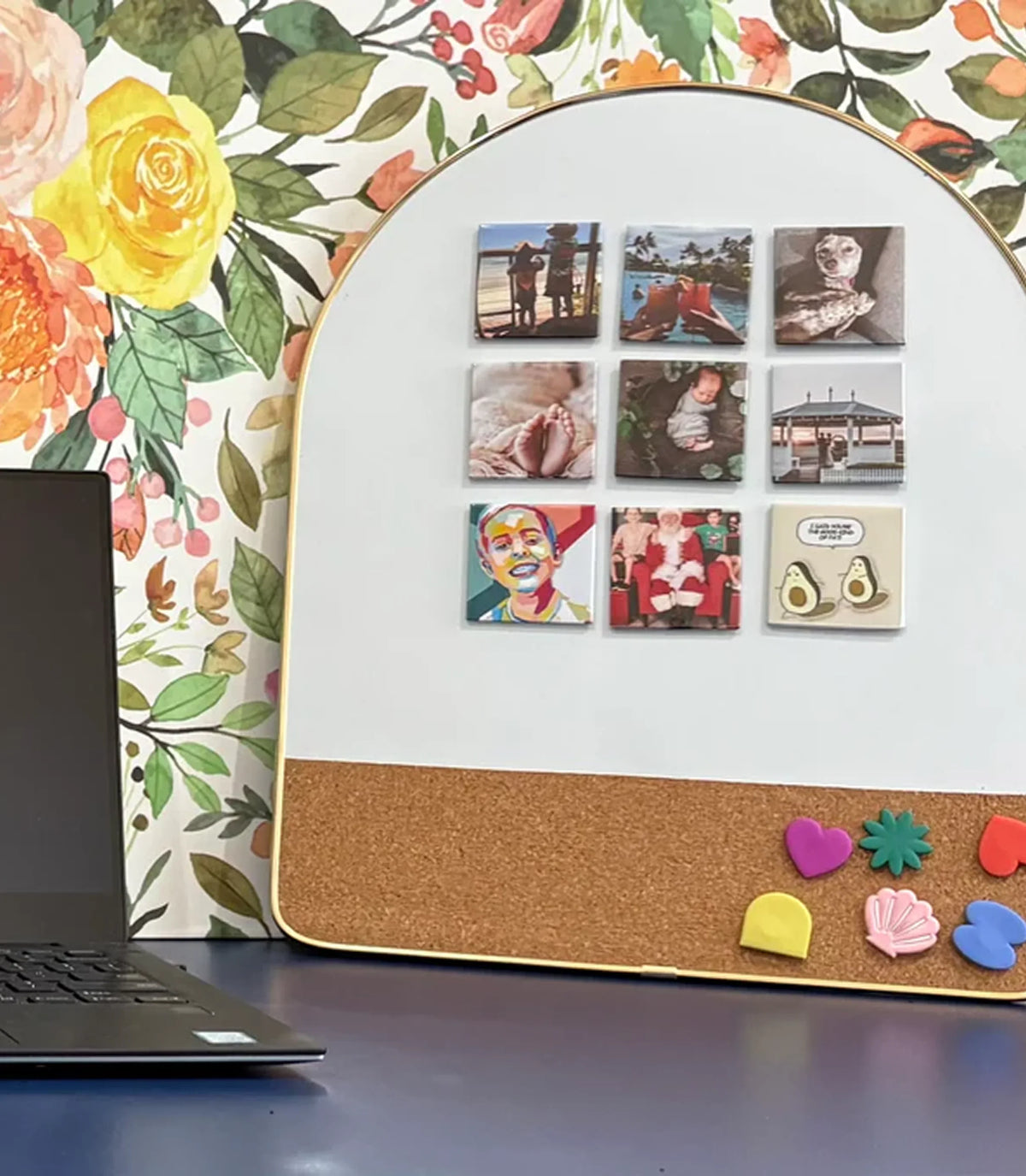
The fridge is often the most honest family memory wall of all. It is where permission slips, party invitations and photos compete for attention, which is exactly why it feels so real. Custom photo magnets can turn that everyday surface into a display that is easy for little hands to rearrange and simple to refresh after each milestone.
Choose photos with a story behind them
The strongest display is not always made from the most polished photos. A slightly blurry snap of your child laughing can mean more than a perfectly posed family portrait. Aim for images that bring back a particular feeling, place or story.
Start by scrolling through your camera roll from the last year. Save the images that make you stop for a second. You might choose the first day of school, a beach holiday, a family barbecue, a new pet, a birthday cake, a quiet cuddle or a backyard project that took far longer than expected.
A good mix usually includes close-up faces, wider shots of places and a few ordinary moments. The ordinary photos are often the ones that become more precious with time. A lunchbox on the bench, cousins piled onto the lounge, your dog waiting by the door - these details hold the texture of family life.
Try not to include every good photo at once. Leaving space gives each picture room to be noticed and makes future updates feel exciting rather than overwhelming.
Create a simple theme without making it too formal
A theme can help the wall feel considered, but it should not make choosing photos difficult. You could organise your display around a year of family life, favourite holidays, the children growing up, grandparents and extended family, or small everyday wins.
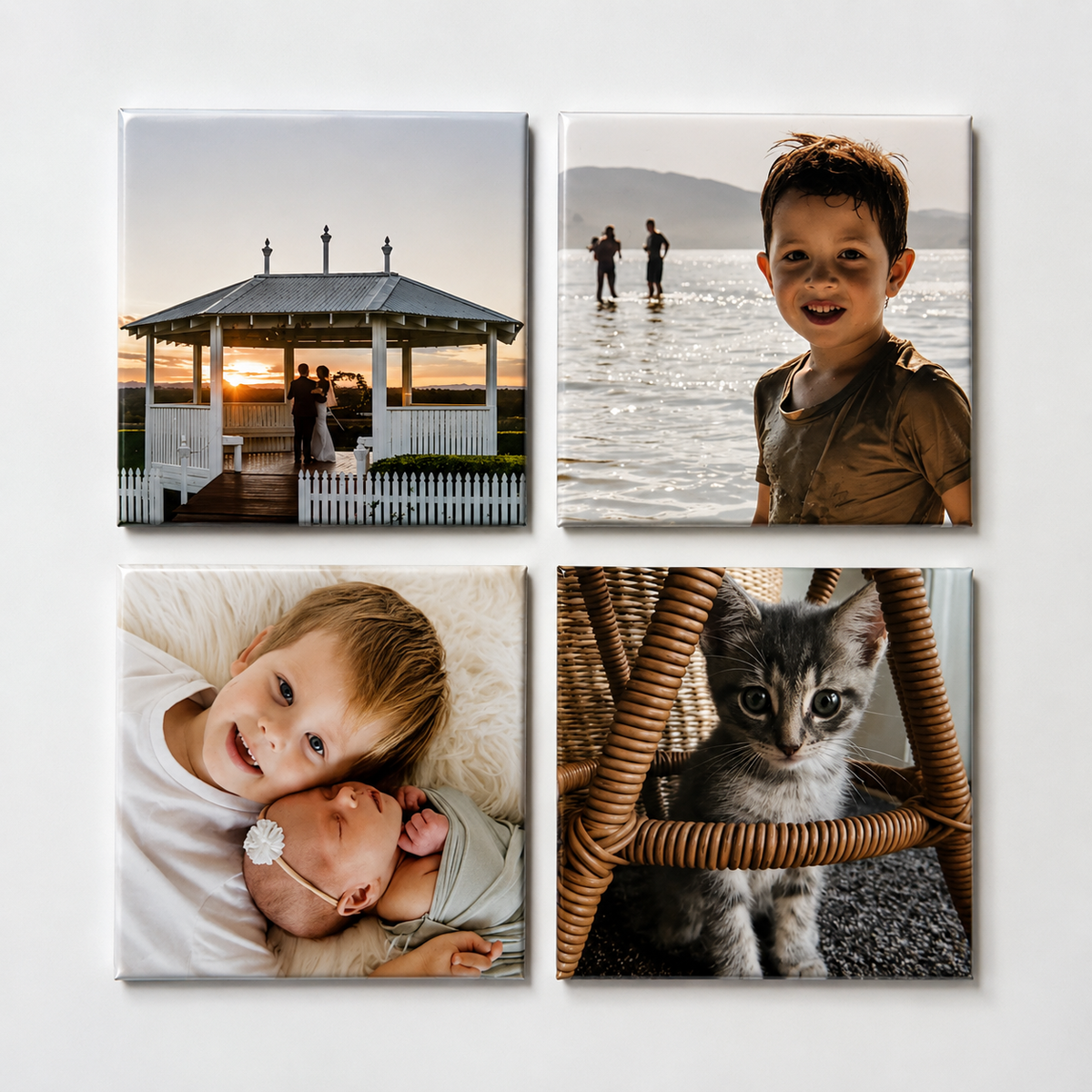
Another easy approach is to use one visual thread. Keep all frames in similar timber tones, print photos in a consistent square shape, or use a repeated colour across the display. This creates a calmer look even when the photos themselves are full of colour and activity.
If you love a more collected style, mix it up. Different frame sizes, children’s artwork, handwritten notes and holiday postcards can sit together beautifully when they are connected by the people and memories they represent.
Plan the arrangement before you commit
A little planning saves you from making extra holes in the wall or ending up with a display that feels uneven. Lay your frames, prints or magnets out on the floor first. Move them around until the balance feels right, then take a photo on your mobile so you can refer back to it while hanging.
For a neat gallery look, use a grid. Square photos are particularly easy to line up, and a consistent gap between each piece makes the arrangement feel intentional. This option suits a hallway, stairwell or dining room wall where you want a more finished decorative feature.
For something more relaxed, begin with one hero image in the centre and build outward. Place larger photos first, then fill gaps with smaller pictures, artwork or short captions. This style is forgiving, which is handy when you know you will want to add new memories regularly.
Keep the display at a comfortable viewing height. As a guide, the centre of the arrangement should sit around eye level for the adults in your household. In a family space, it can be lovely to hang some pieces lower too, so children can see themselves and point out the people they love.
Make room for memories that have not happened yet
The difference between a photo display and a true memory wall is that a memory wall keeps changing. It does not need to be completed all at once. In fact, a wall that has room to grow tends to feel more meaningful over the years.
Leave a small section open for the next birthday, school photo, holiday or family visit. You could also swap pictures with the seasons: beach days and Christmas gatherings over summer, then weekend walks, footy games and cosy indoor moments when the weather cools down.
For young children, updating the display can become a small family ritual. Let them choose a recent favourite photo and tell you why it belongs on the wall. Their answer may be funny, surprisingly detailed or completely different from what you expected. Either way, it helps them see that their experiences matter.
A rotating display also keeps the task manageable. Instead of trying to print and frame hundreds of photos, choose a handful each month or after a special event. The camera roll becomes less of a digital pile, and your home tells a story that is still being written.
Add details that bring the pictures to life
Photos do most of the work, but a few small details can make the wall even more personal. Include the year beneath a group of holiday images, write a child’s funny quote on a small card or add a postcard from a place your family loved. These little prompts are especially valuable later, when dates and details are harder to remember.
Be selective with captions. Too much text can make the display feel busy, while a few well-chosen words add context. A simple “First day of Kindy”, “Port Stephens, 2026” or “Sunday pancakes” is often enough.
You can also make space for the people who do not live under your roof. A photo of grandparents, interstate cousins or a much-loved family friend helps children feel connected to their wider circle. For families spread across Australia, those familiar faces on the wall can make distance feel a little smaller.
Choose display options that match your routine
Frames give a classic, more permanent look and work well for a carefully curated gallery wall. They are ideal if you prefer larger prints or want a feature wall in a living area. The trade-off is that changing photos can take more time, particularly if you need to take frames down and rehang them.
Photo ledges are a good middle ground. You can layer prints and frames, swap pictures without tools and add a small plant or keepsake if the ledge is safely out of reach. They suit homes where the display will evolve often.
Magnets offer the easiest option for a family that likes to keep things moving. Just Magnets prints thick, vibrant 5 cm x 5 cm photo magnets locally in Newcastle, so a fridge, filing cabinet or magnetic board can become a changing collection of faces and moments. They are especially handy for renters, grandparents and anyone who wants a personal display without measuring, drilling or committing to one layout.
There is no single right choice. A formal gallery wall may suit your front room, while a cheerful magnetic display works better in the kitchen where family life happens at full speed.
Keep the wall meaningful, not perfect
A memory wall is not meant to be a record of only your best days. It can hold the messy, funny, tender moments that make up a real family. Leave in the photo where someone is pulling a strange face. Keep the one from a rainy camping trip. Let your children see that happy memories do not have to be staged to be worth keeping.
Once you have chosen the first few images, put them up. Do not wait for the perfect layout, the perfect wall colour or the perfect collection of photos. The best family memory walls earn their place slowly, one ordinary and unforgettable moment at a time.