The best family photos are rarely the perfectly posed ones. They are the sandy feet after a beach day, a toddler asleep in the car, Nanna laughing at the kitchen table, or a muddy dog wedged into the family selfie. Learning how to preserve family memories starts with noticing that these ordinary moments are the ones you will most want to hold onto.
Phones have made it easy to take thousands of photos, but they have also made it easy for those photos to disappear into a camera roll. A thoughtful approach does not need to become another big job on your weekend list. It simply means choosing a few meaningful moments, giving them a story, and bringing the best ones into everyday view.
Start with the moments that tell your family story
Do not wait for a major holiday, a polished family portrait or a milestone birthday. A family story is built in the gaps between the big events. Take photos of the school drop-off grin, the birthday cake mess, the garden harvest, the first day in a new home, and the people who make your house feel like yours.
It helps to photograph people in context, too. Capture your child with their favourite toy, your partner at the barbecue, or your grandparents in the chair they always sit in. Years from now, those small background details can bring a memory rushing back more strongly than a formal portrait ever could.
When you are looking through your mobile, choose pictures that make you feel something rather than only the technically perfect shots. A slightly blurry photo can still be priceless if it captures a real expression or a person you love.
Create a simple routine for saving photos
The hardest part of preserving memories is usually not taking the photo. It is sorting through the hundreds that arrive each month. Rather than promising yourself you will organise everything one day, build a small routine that is realistic for your household.
At the end of each month, set aside 15 minutes to favourite the photos you would be upset to lose. Create an album labelled with the month and year, or use simple folders such as “2026 family”, “weekends” and “school moments”. If several people take photos in your family, agree on one shared place where the best images can be collected.
Once or twice a year, make a second selection from those favourites. Pick the photos that deserve to leave the screen: the ones you want your kids to see at breakfast, the ones that would make a grandparent smile, or the ones that mark a season of life you do not want to forget.
This approach is gentler than trying to curate every image. You are not creating an archive for a museum. You are keeping hold of the people, places and feelings that matter to your family.
Protect the digital copies, but do not stop there
Backing up your photos matters. Phones get dropped, replaced and reset. Keep copies in more than one place, such as a cloud photo service and an external hard drive stored safely at home. Check occasionally that your backup is actually working, especially after changing phones.
Digital storage is useful, but it has a limitation: memories you cannot see are easy to forget. A folder full of photos may be secure, yet it does not invite conversation in the way a picture on the fridge does. Children are especially drawn to images they can see and touch every day. They notice themselves as babies, ask about relatives, and begin to understand where they belong.
Printed keepsakes are not a replacement for backup. They are the human side of preservation. They turn a photo from a file into part of family life.
How to preserve family memories in everyday view
A display does not need to be fancy to be meaningful. In fact, the best one is often the one you will update. The fridge is a natural family noticeboard, already surrounded by school notes, invitations and the little practical details of daily life. Adding photos there gives those moments a proper place in the home.
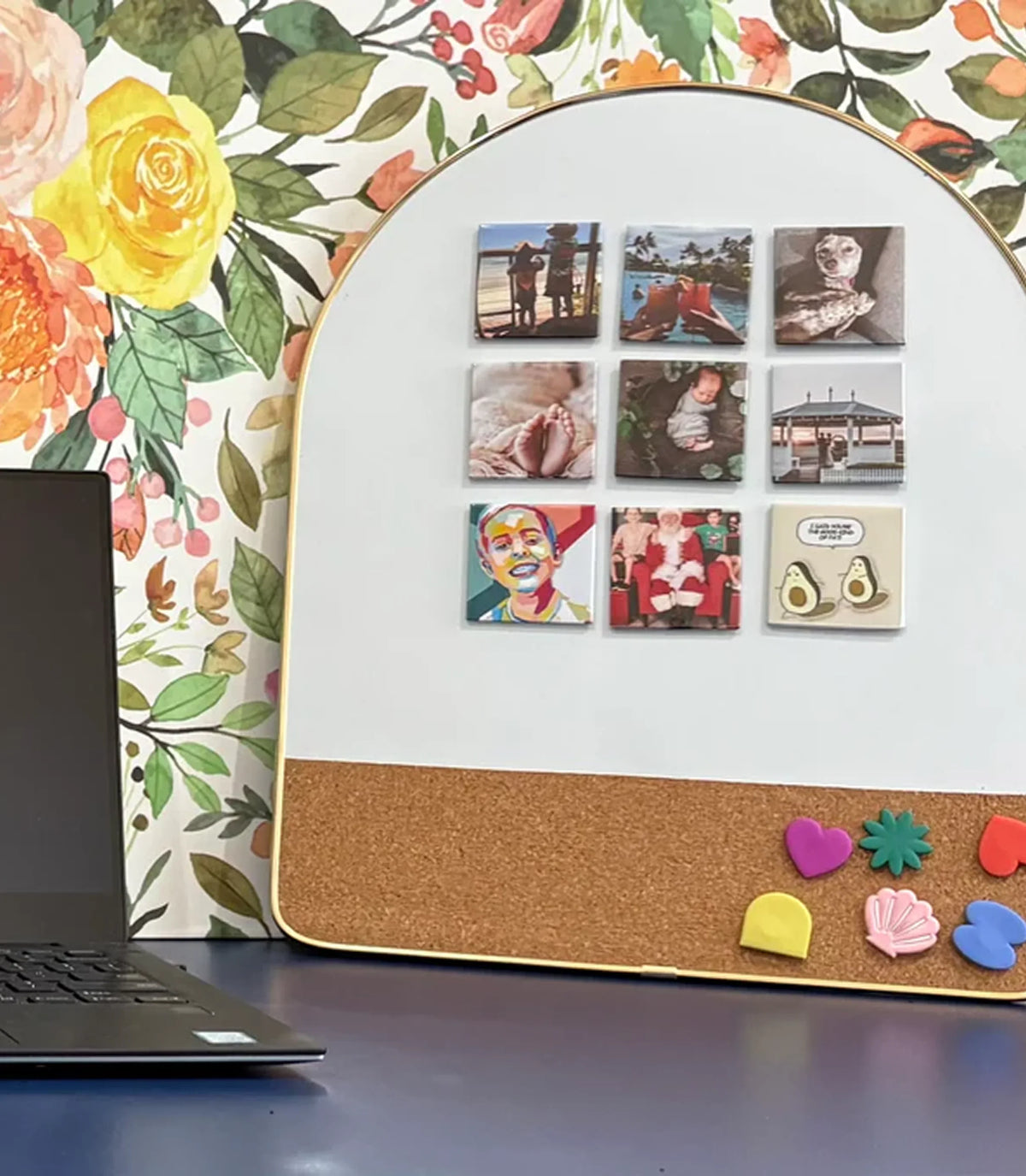
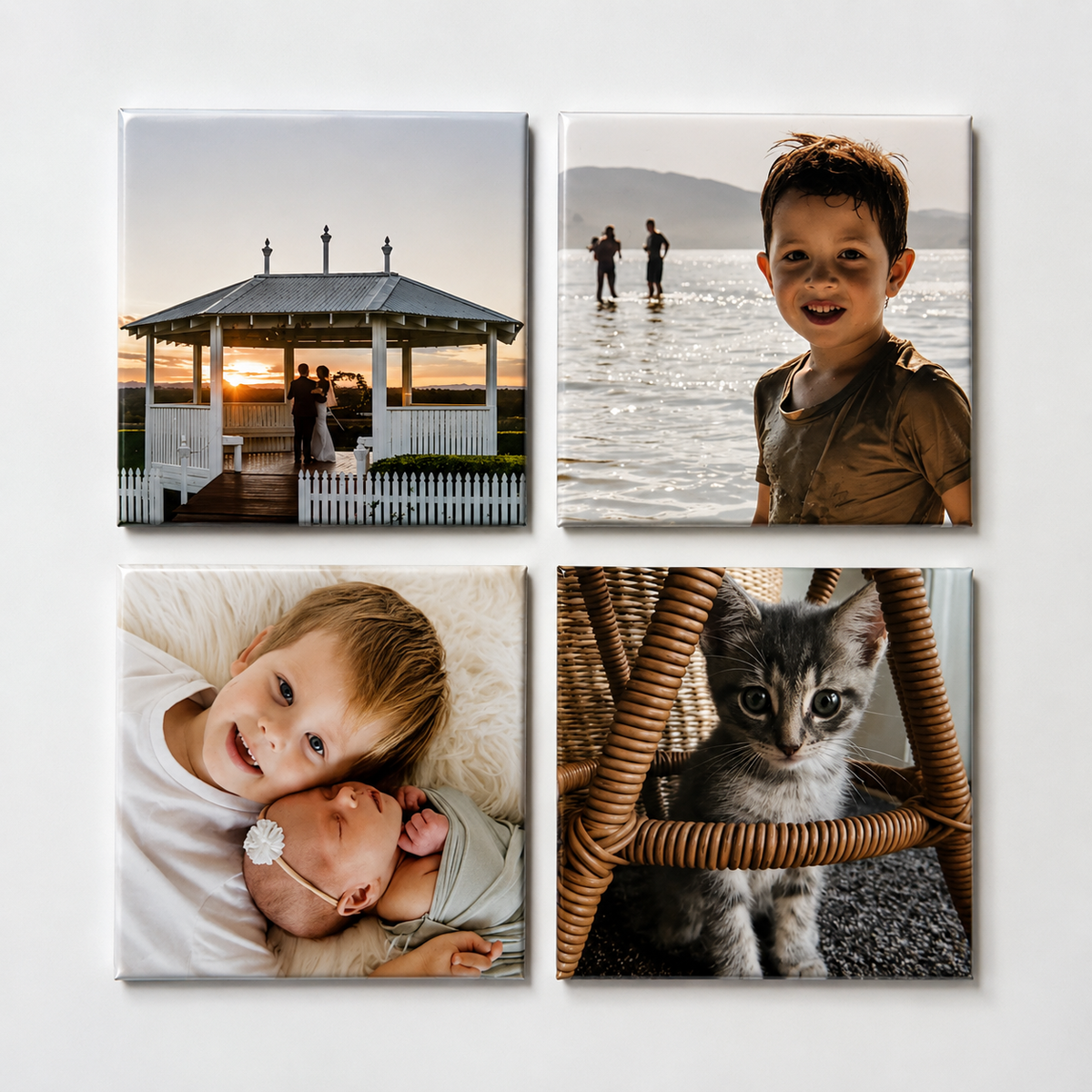
Photo magnets work particularly well because they are easy to move, refresh and share. You can build a small collection over time: a set from each school year, a summer holiday, a new baby, a wedding, or the much-loved pets who are part of the family too. Unlike a framed print that may stay in one spot for years, magnets invite you to rearrange your memories as life changes.
At Just Magnets, each order is printed locally in Newcastle and checked by a small team before it heads out. The 5 cm by 5 cm format is designed for the everyday moments that deserve more than a quick scroll, with thicker magnets made to stay on the fridge for years rather than feel like a flimsy novelty.
If you are choosing photos for a display, variety creates the most personal result. Include close-up faces, group shots, a favourite place, and a few candid snaps. A mix feels more like real family life than a row of identical posed portraits.
Add the stories that photos cannot show
A photo holds a lot, but it cannot always explain why the moment mattered. Pair selected pictures with a short note in a memory journal, on the back of a printed photo, or in the caption of a digital album. Keep it simple: who was there, where you were, and what made everyone laugh.
For example, “First camping trip at Forster. It rained all night, but the kids still wanted to swim at sunrise.” That one line can preserve the detail that slips away first. You do not need to write beautifully. You only need to write truthfully.
Invite other family members to contribute, especially grandparents. Ask them to identify people in old photographs or tell you the story behind an image. Recording a voice note while they talk can be just as valuable as the photo itself. Their words, expressions and version of the story are part of the keepsake.
Make memory-keeping part of celebrations
Big occasions are a natural time to gather photos, but they also create an easy reason to turn them into gifts. A personalised set of family photos can be a thoughtful Mother’s Day present, a birthday surprise for Dad, or a Christmas gift for grandparents who already insist they do not need anything.
The difference is that a photo gift does not have to sit in a drawer. It can become part of the morning routine: a grandchild’s grin on the fridge, a wedding photo near the kettle, or a family holiday remembered every time someone reaches for the milk.
For new parents, consider starting a small collection from the first year rather than waiting for a single large project. One photo each month, plus a few pictures of the people who visited and helped, becomes a beautiful record of how quickly a baby’s world grew. For older children, let them help select their favourites. They may choose the silly photo you nearly deleted, and that is often the point.
Accept that not every memory needs preserving
There is a trade-off in trying to save everything: when every photo is equally important, none of them has room to shine. Keep the images that reflect your family as it really is, not the version that looks most impressive online.
It also depends on your stage of life. During busy years with young children, a monthly selection may be plenty. If you are sorting through inherited photos after losing a loved one, take your time. Preserve names and stories first, then decide what to print, display or pass on. Memory-keeping should bring comfort, not pressure.
The aim is not a perfectly organised archive. It is a home where the people you love are visible, where children can see their own story taking shape, and where a glance at the fridge can remind you that an ordinary Tuesday was worth remembering.