

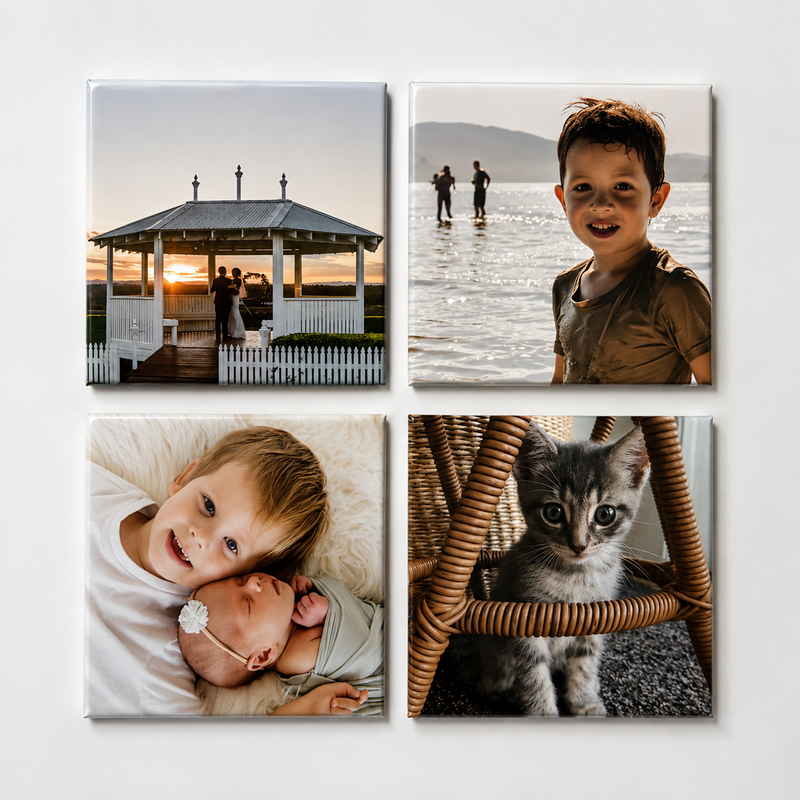
A fridge covered in family photos, birthday snaps and scribbly artwork can make a kitchen feel properly lived in. But for parents and carers, the question behind the happy display is a sensible one: are magnets safe around children?
The honest answer is that it depends on the magnet, the child’s age and how the magnet is used. A securely attached fridge magnet that stays high on the fridge is very different from a tiny loose magnetic ball found on the floor. Magnets can be a lovely way to keep memories close, but they need the same common-sense care you would give any small household item around young children.
Are magnets safe around children at home?
Magnets are not automatically unsafe. Many families use fridge magnets every day without a problem. The serious risk comes when a child can access, mouth or swallow small magnets, particularly more than one.
If two or more magnets are swallowed, they can attract to each other through folds of the bowel. That pressure can trap or damage tissue, even when the magnets were swallowed at different times. This is why high-powered small magnets, magnetic balls and loose pieces from broken toys are a major concern.
A single magnet can also be serious, because it may not be clear whether a child has swallowed only one. If a magnet is swallowed alongside another metal object, such as part of a toy, it may create a similar problem. It is not a situation to monitor at home or wait out.
Young children are naturally curious, and mouthing objects is part of how babies and toddlers explore. The risk is highest for children who are still in that stage, as well as older children who may play with small magnets as jewellery or pretend piercings. Even a child who usually follows instructions can make a quick decision when no adult is looking.
The magnets that deserve the most caution
Not all magnets present the same level of risk. Large, flat fridge magnets that are well made and remain firmly on the fridge are generally less accessible than tiny, powerful loose magnets. Still, any magnet can become a hazard if it cracks, peels, separates from its backing or falls within a child’s reach.
Take extra care with magnetic building sets, magnetic beads, magnetic balls, novelty desk toys, craft supplies and magnetic toy parts. Their small size and strong pull make them especially dangerous if swallowed. Keep these completely out of reach of young children, rather than relying on a high shelf they might eventually climb.
Fridge magnets deserve a quick check too. A photo magnet or souvenir magnet should be discarded if it is damaged, if the magnetic backing is lifting, or if pieces could be pulled away by little hands. It is also worth checking the floor near the fridge from time to time. Small items have a way of ending up underfoot, particularly in busy family kitchens.
Strength is only part of the story
It is easy to assume a weak magnet is harmless and a strong one is always dangerous. In practice, size, shape, number and access all matter. A small magnet that a child can swallow is more concerning than a larger magnet that stays intact and out of reach. Two small magnets are far more dangerous than one, especially if they can attract through the body.
That is why a simple household rule works best: magnets are for the fridge, a grown-up’s craft project or age-appropriate supervised play - never for mouths, noses, ears or pretend piercings.
How to make a magnetic display safer
You do not need to clear every keepsake from the fridge. A few practical habits can make the display safer while keeping those everyday memories where you enjoy them.
Start by placing magnets high on the fridge, away from where a toddler can reach while standing on the floor or climbing onto a chair. Give each magnet a gentle check when you wipe down the kitchen. If it bends, cracks, sheds pieces or no longer holds together properly, replace it rather than hoping it will last another few months.
Keep spare magnets, craft magnets and magnetic clips in a closed cupboard or container. Avoid leaving them loose in a kitchen drawer where children may be helping themselves to colouring supplies, batteries or snacks. If older children use magnets for school projects, ask them to pack everything away straight afterwards and check the work area together.
It also helps to be clear with visitors. Grandparents and friends may bring magnetic toys or novelty items without realising the risk for a younger sibling in the house. A calm heads-up is usually all that is needed: small magnets are stored away here because the little one still puts things in their mouth.
What to do if a child may have swallowed a magnet
Act quickly if you see a child swallow a magnet, find a missing magnet after they have been playing, or suspect they may have put one in their mouth. Children may look completely well at first. Waiting for symptoms is not a safe plan.
1. Seek urgent medical advice straight away. In Australia, call the Poisons Information Centre on 13 11 26 for immediate advice, or call 000 if your child is having trouble breathing, is choking, collapses or appears seriously unwell.
2. Do not make your child vomit. Do not give food, drink or laxatives unless a medical professional tells you to.
3. Keep any matching magnets or packaging. This can help clinicians understand the size, type and possible number involved.
4. Tell the clinician if more than one magnet could be missing. Also mention any metal item your child may have swallowed or been playing with.
Symptoms such as tummy pain, vomiting, drooling, fever, refusal to eat, coughing or unusual tiredness need urgent attention. But the absence of symptoms does not rule out a problem. Follow the advice you are given and be direct about what you saw, what is missing and when it may have happened.
If a magnet has been pushed into a nose or ear, seek medical advice rather than trying to remove it yourself with another magnet or a metal tool. That can push it deeper or cause injury.
Choosing magnets for a family home
For most homes, the safest approach is to choose magnets intended for display, keep them in good condition and place them where small children cannot handle them. Think of fridge magnets as home décor, not toys.
When you are ordering personalised photo magnets, consider where they will live before they arrive. A higher section of the fridge can become a little gallery of first days of school, holiday swims, new babies and the dog being ridiculous in the backyard. It keeps the memories part of daily life without putting them in the middle of a toddler’s play zone.
Quality matters here. A durable, intact magnet is preferable to a flimsy item that can curl, split or lose its backing with regular use. Even so, regular checks are part of responsible use. Children grow quickly, and the safe spot for a crawling baby may be easy reach for a confident preschooler six months later.
A sensible balance for sentimental homes
Family photos belong where you can see them. They brighten an ordinary Tuesday morning, prompt a story at dinner and remind everyone of the people and moments that matter. Keeping magnets safely displayed does not mean making your home feel clinical or putting every precious thing away.
It means treating small magnets with the care they deserve: keep loose and tiny pieces out of reach, inspect fridge displays often, and get urgent help if one goes missing or may have been swallowed. With those habits in place, your fridge can stay full of colour, character and the little moments your family loves seeing every day.