

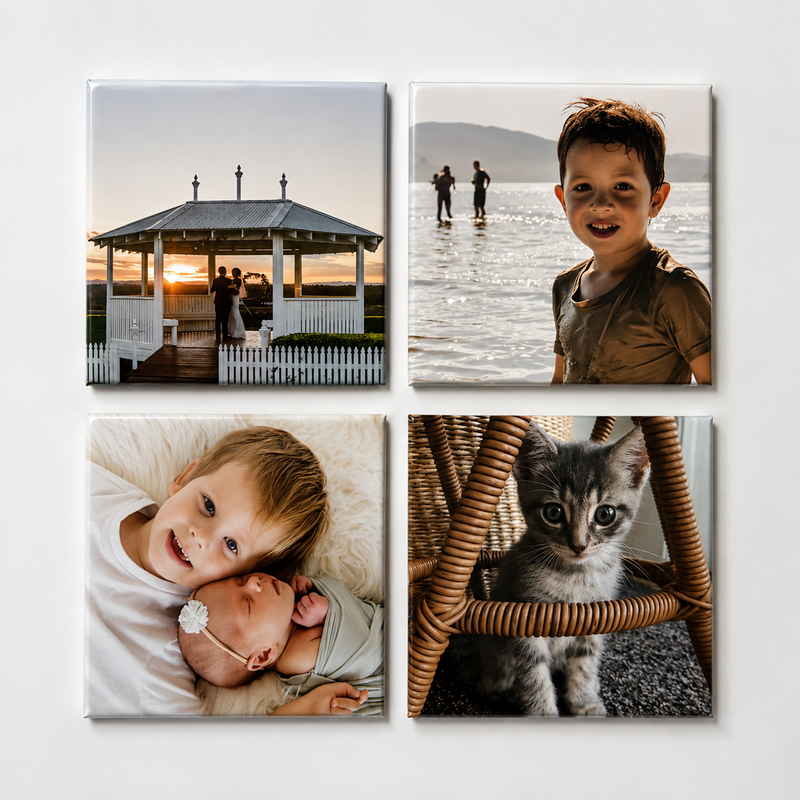
A splash from the sink, a humid summer afternoon, little hands with a wet cloth - it all raises the same sensible question: are fridge magnets waterproof? For most fridge magnets, the honest answer is no. They are made for everyday life in the kitchen, but that is different from being designed to sit in water, go through the dishwasher or live outdoors in the rain.
Your photo magnets should be able to handle the occasional light wipe and the normal moisture found in a busy family kitchen. Keeping them looking bright for years comes down to understanding the difference between water-resistant and waterproof, then giving them a little care.
Are fridge magnets waterproof or water-resistant?
A waterproof item is sealed so water cannot get into it, even after extended exposure. Think of a properly rated outdoor light or a dry bag used at the beach. A typical printed fridge magnet is not built to that standard.
Many quality magnets have a printed image with a protective surface or laminate. This helps guard against fingerprints, light splashes and day-to-day handling. But moisture can still find its way into the edges or layers if the magnet is soaked, left in a puddle or repeatedly exposed to steam. Over time, that can affect the print, adhesive or magnetic backing.
So, are fridge magnets waterproof enough for real family life? They can cope with normal indoor use, including the odd kitchen splash, provided you dry them promptly. They are not suitable for underwater use, a dishwasher cycle, the bathroom shower screen or the outside of the letterbox.
The material and construction matter too. Thin paper-style promotional magnets may curl or fade sooner than a thicker, well-finished photo magnet. A carefully made magnet has a better chance of staying flat, colourful and firmly attached to the fridge, but even a good one benefits from being kept dry.
What water can do to photo magnets
Water damage is not always dramatic. Often, it begins around the corners. You might notice the image layer lifting slightly, the edges softening, or a change in the finish after the magnet has been damp for too long.
Repeated moisture can also cause the backing to warp. If that happens, a magnet may no longer sit flush against the fridge door. It can become easier to knock off when someone reaches for the milk or opens the door a little too enthusiastically.
Heat makes the problem worse. A magnet positioned close to a kettle, toaster, cooktop or dishwasher vent can be exposed to a regular mix of warmth and steam. That does not mean you need to clear every magnet from the kitchen. It simply means the most sentimental ones deserve a safer spot on the cooler part of the fridge.
Direct sunlight is another consideration. Sun is not water, of course, but it is one of the things most likely to fade printed photos over time. If your fridge catches strong afternoon light through the window, rotate your magnets occasionally or keep your favourites on a shaded side panel.
How to clean fridge magnets safely
Fridge magnets collect everyday evidence of home life: cooking splatters, fingerprints, dust and the occasional mystery mark. The safest cleaning approach is gentle and quick.
Start by removing the magnet from the fridge. Wipe the front with a soft, barely damp microfibre cloth, then immediately dry it with another clean cloth. Avoid soaking the cloth, and do not run the magnet under the tap.
For a stubborn spot, use a tiny amount of mild dishwashing liquid diluted in water. Apply it to the cloth rather than directly onto the magnet. Wipe softly without scrubbing the edges, then dry straight away.
Skip abrasive sponges, disinfectant sprays, bleach, glass cleaner and strong kitchen degreasers. These products may dull the finish or affect the printed surface. The same goes for putting magnets in the dishwasher, even if they look as though they could handle it. The combination of heat, water pressure and detergent is far harsher than a quick wipe on the bench.
If a magnet does get properly wet, pat it dry rather than rubbing it. Leave it flat in a dry, airy room until both sides are completely dry before placing it back on the fridge. Do not speed things up with a hairdryer, radiator or direct sun, as excess heat can cause curling.
The best places to display your magnets
The fridge door is a classic for good reason. It turns a daily household surface into a rotating collection of holidays, newborn cuddles, muddy footy mornings, school photos and the people you love. For most homes, it is exactly where photo magnets belong.
Choose an area away from direct splashes and major heat. The upper section of the fridge door or a side panel is usually a better choice than the space beside the kettle. Make sure the surface is clean and dry before adding magnets, too. Grease and condensation on the fridge can transfer to the backing over time.
A fridge is not the only option. Magnets also work beautifully on a metal filing cabinet in a home office, a magnetic noticeboard or a steel laundry cabinet. These spots can be especially useful for displaying school photos or gifting a set to grandparents who may not have room on their fridge door.
Avoid outdoor metal surfaces, the car, a barbecue exposed to weather, and any appliance that gets very hot. Even if the magnet stays attached, rain, sun and changing temperatures are tough on printed keepsakes.
A few habits that help magnets last
Photo magnets are made to be picked up, rearranged and enjoyed, not hidden away in a drawer. A handful of simple habits can keep them in great shape without making them precious.
Keep them dry after cleaning, move them away from constant steam, and avoid bending them when taking them off the fridge. If children are helping to rearrange the family gallery, show them how to lift each magnet from an edge rather than peeling or twisting it. This is particularly helpful with smaller magnets that can be tempting to flick around during breakfast.
It also helps not to overload a single magnet with thick stacks of paper. A photo magnet can hold a note or a child’s drawing depending on its strength and the fridge surface, but it is best not to ask it to carry a heavy pile of school notices, takeaway menus and shopping lists all at once.
When you pack magnets for a move, place them flat between clean sheets of paper or card. Keep them away from damp boxes and avoid storing them in a hot garage or shed. A cool, dry cupboard is kinder to printed images than a spot exposed to changing weather.
Why quality still makes a difference
Not all magnets are created for the same job. A thin giveaway magnet is often meant for short-term advertising. A personalised photo magnet is a small keepsake, carrying a moment you do not want to lose to a curled corner or faded image.
That is why construction matters. A thicker magnetic base, clean print quality and a well-finished surface all make a difference to how a magnet looks and feels over time. At Just Magnets, every photo is turned into a 5 cm x 5 cm keepsake and checked by our Newcastle team before it heads out, because the little details matter when the image is of your favourite people.
Still, quality is not a promise that a magnet can withstand every condition. It is a reason to expect a lasting indoor display when it is treated as one.
Common questions about fridge magnets and water
Can I put a fridge magnet in the dishwasher?
No. Dishwashers use hot water, detergent and strong sprays that can damage the printed layer, edges and backing. Wipe it gently by hand instead.
What if my magnet gets splashed?
A quick splash is usually not a disaster. Take it off the fridge, pat it dry and let it air-dry flat before putting it back. The key is not leaving moisture sitting on it.
Can photo magnets be used in the bathroom?
They can be displayed on a suitable metal surface away from direct water, but bathrooms are often humid. For a keepsake you want to preserve, a dry room is the better choice.
Will fridge magnets rust?
The answer depends on the materials used. Some magnet backings or components can be affected by long-term moisture, particularly if the protective surface is damaged. Keeping them dry greatly reduces the risk.
The best family photos are the ones you see often: the cheeky grin from the first day of school, a sun-soaked holiday snap, Nan holding the newest baby. Give those small moments a dry, comfortable place on the fridge, and they can keep making an ordinary day feel a little more like home.